%20(1080%C2%A0%C3%97%C2%A01080%C2%A0px)%20(440%20x%2040%20px)%20(1).svg)
Client: National Air and Space Museum, Smithsonian Institution · Partner: Cameron Pinegar (Director) · Service: Penrose Audio — Davies Aguirre
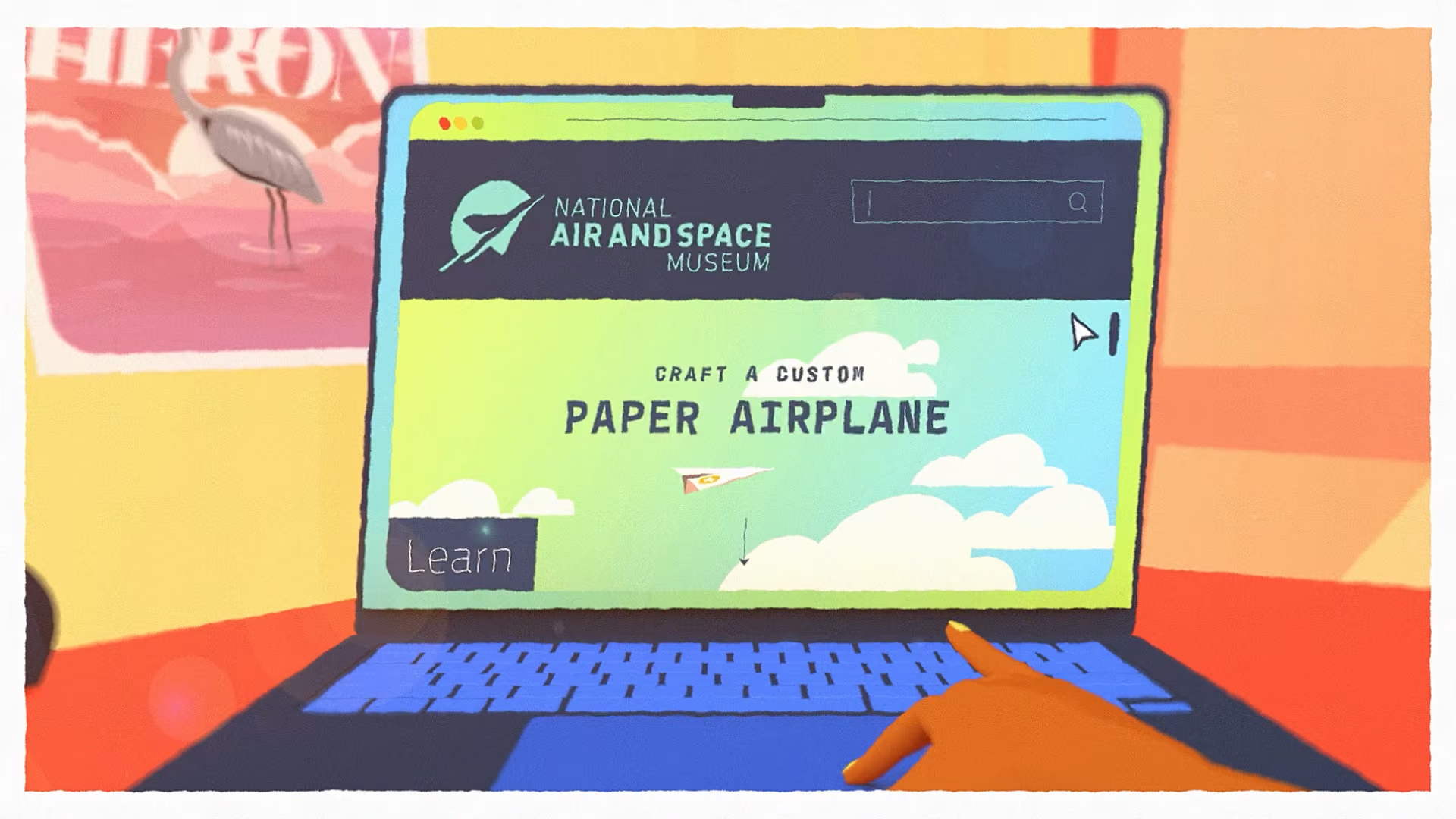
This two-minute animation, created by director Cameron Pinegar, follows a young girl's paper plane as it transforms — fold by fold — into some of history's most significant aircraft: the Wright Flyer, a WWI dogfighter, the Spirit of St. Louis, an Apollo rocket, and finally NASA's Space Launch System. The piece was produced for the National Air and Space Museum, Smithsonian Institution. Director Pinegar's brief was direct: "Keep it inspiring, playful, and fun. Emphasize the idea that these models are made from paper, but hint towards the real aircraft they represent. There are three big moments where I want the music and sound design to have dramatic shifts that drive the story arc."
The animation lives in two registers at once — the lightness of a child's afternoon and the weight of history. A paper plane is a toy; it is also the first act of imagining flight. We needed an audio approach that could hold both without collapsing into sentiment on one end or grandeur on the other. The craft was in the transitions: each aircraft needed to feel like it arrived from paper, not from a stock library.
Music supervision anchored the piece to two tracks from Founder Music. The primary version uses Break of Day, which carries the animation's sense of wonder and forward momentum without crowding it. For a second version, we used Levitator, engineering a deliberate ambient pause at 1:14 — a held breath before the animation's most dramatic visual moment — followed by a full dynamic burst that coincides with the ceiling crash. The pause does more work than any fill could.
Three structural transitions defined the sound design architecture:
Each aircraft received individually designed sound treatment, shaped to reflect both the paper origin and the real machine it was becoming:
Throughout the piece, the paper material of the source aircraft was kept audible. Light folding textures and the faint crinkle of treated paper samples are threaded into each transformation, grounding each new aircraft in its origin. The sound never lets you forget that all of this began with a fold.
The finished piece achieves what the director asked for: a sound world that is playful in its lighter moments and genuinely moving at its three dramatic peaks, with each transition feeling like a consequence of everything that came before it.
For anyone who ever flew a paper plane, the audio holds the right weight: light enough to delight, substantial enough to inspire.
.gif)