%20(1080%C2%A0%C3%97%C2%A01080%C2%A0px)%20(440%20x%2040%20px)%20(1).svg)
Client: Self-Directed · Partner: Axel Kinnear · Sound Design & Music: Penrose Audio — Davies Aguirre
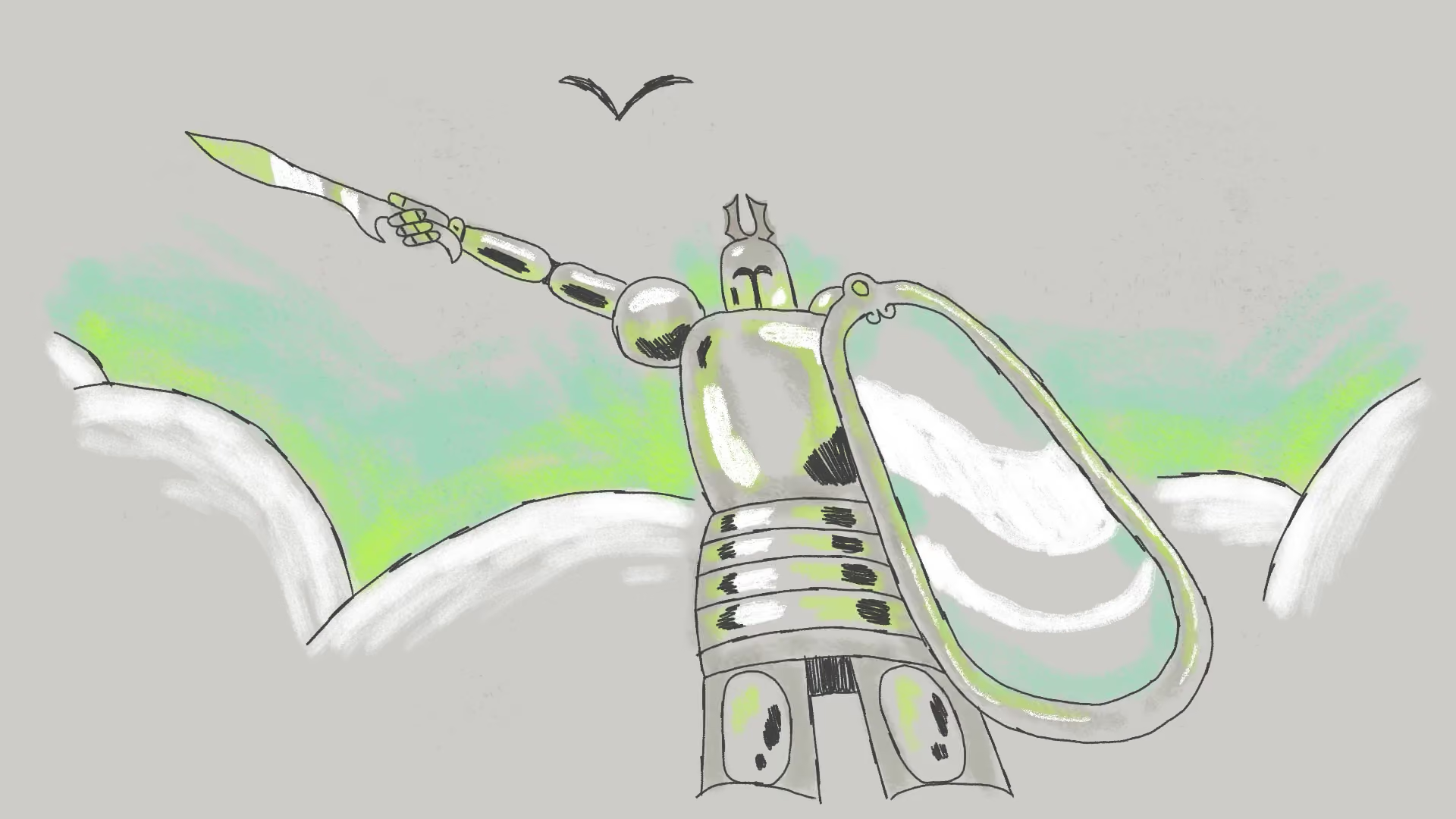
Our second collaboration with Axel Kinnear, this cel-animated short follows a warlock who unknowingly casts a spell — summoning a book, and with it, an entire magical world. Axel gave full creative freedom on both sound design and music: a rare and genuinely exciting kind of brief.
"I love to draw weird lil fantasy guys and these animations are fun for me to make and practice my cel animation. The idea behind this one is pretty much just the intro warlock unknowingly casting a spell summoning the book and the world and characters that follow." — Axel Kinnear
Cel animation has its own inherent musicality — the slight irregularity of hand-drawn frames, the way forms shift and breathe between drawings. Working with Axel's material, we wanted the sound design to honor that handmade quality rather than polish it away. The world of this piece is whimsical and mystical in equal measure: a warlock who doesn't quite know what he's doing, surrounded by creatures that are more quirky than threatening, all of it unfolding with the loose, charming energy of someone drawing for the pleasure of drawing.
The score needed to carry two tonal registers at once — the delicate, spinning elegance of an opening waltz, and the grand orchestral sweep of a world expanding beyond its borders. We found our structural model in Tchaikovsky's Waltz of the Flowers: that specific combination of formal grace and barely-contained exuberance.
The piece opens in suspended quiet. We built a thin ambient layer from ethereal chimes — notes allowed to decay fully before the next arrives — and a low atmospheric texture that sits at the threshold of perception. Soft whispers were threaded through the background as a textural suggestion of something hovering just out of reach. The intention was negative space: a world that feels slightly held-in-breath before anything happens.
As the warlock's spell begins to take shape, the sound design builds in gradual layers. Subtle crackling energy — designed from electrical arcing recordings and granular synthesis of processed resin — introduces the first suggestion of something arcane at work. Airy whooshes, shaped with slow attacks and long diffuse tails, give the magic its physical presence without making it feel mechanical. The spell doesn't crack like a whip; it unfurls.
At the 13-second mark, Axel's animation introduces impact frames accompanying a lightning strike. The sound needed to be sharp enough to match the visual impact without disrupting the whimsical tonal register. We used a short electrifying burst — a bright top-end crack riding over a fast mid-range thump, with minimal low-frequency content to keep it feeling sudden rather than heavy. The impact frames land, and the world moves on.
The arrival of the summoned book is the emotional center of the piece. We designed this sequence with layered resonant tones — struck metal bowls pitched down and slowed, flickering sparks rendered in granular synthesis — woven together with slowly-modulating arcane textures to give the moment a sense of genuine wonder. Each layer was automated to swell and recede in response to the animation's movement rhythm, so the sound feels drawn out of the image rather than placed over it.
Axel's creatures are wonderfully strange: small, expressive, unmistakably hand-drawn. Sound design leaned into that quality. Squeaky textures and rubber-inflected tones were used for movement and vocalizations, tuned to feel playful without tipping into parody. Subtle growls and soft impacts were timed to the hand-drawn aesthetic's natural rhythmic irregularities, so the sound breathes with the animation.
The score opens with a delicate arrangement inspired by Waltz of the Flowers — harp arpeggios, light woodwinds, a string melody that moves with a gentle three-beat lilt. As the spell takes hold and the magical world begins to reveal itself, the music transitions into a broader orchestral palette: fuller strings, brass entering in long sustained tones, harmonic language shifting toward spacious grandeur. The transition is gradual — one register growing out of the other — so that by the time the full orchestration arrives, it feels earned.
The finished piece moves through its two tonal registers with ease: tender and expansive, playful and briefly grand. The sound design gives Axel's hand-drawn world physical weight and textural warmth, while the score gives the whole thing a sense of occasion — a small spell cast by someone drawing weird lil fantasy guys, which somehow conjures something genuinely lovely.
Magic, handled well, always sounds a little like it surprised the person casting it.
.gif)